Techno-Authoritarianism Part Three: Neoliberals, Anti-statists, and Edgelords
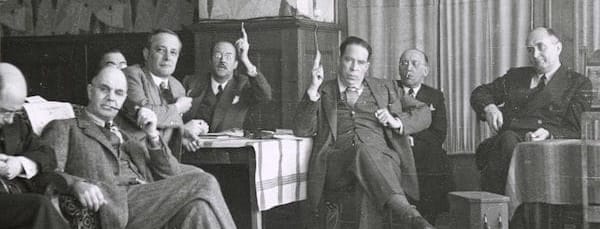
“Economics are the method; the object is to change the heart and soul.” — Margaret Thatcher, speaking during an interview (1981).¹
What Exactly is Neoliberalism?
Neoliberalism is simultaneously an economic, political, and personal ideology. It could be the most powerful animating force in our present reality — and many people have never heard of it. It’s the current strain of capitalism today, a hyper-financialized version that rose to prominence beginning in the 1970s, following the mercantile (1500-late 1700s), the liberal-colonial (1800s), and the state-managed (1918-late 1970s) eras of capitalism.² In this current form, the market is king and “market logic” drives everything from international monetary policy to our personal choices. It has also eroded social services, democracy, the environment, and public goods as private entities use neoliberal ideology to siphon money away from taxpayers toward an increasingly small group of powerful elites. Among the most elite and most powerful are the techno-authoritarians of Silicon Valley, all of whom have been aided in their rise to power and accumulation of wealth by neoliberal ideology and government policy.
Neoliberalism is a term and concept that occurs frequently, but is also frequently misunderstood. In A Brief History of Neoliberalism (2007), critical geographer David Harvey states that:
Neoliberalism is in the first instance a theory of political economic practices that proposes that human well-being can best be advanced by liberating individual entrepreneurial freedoms and skills within an institutional framework characterized by strong private property rights, free markets, and free trade.³
In other words, there should be minimal government intervention, and each of us is an entrepreneurial individual who should be left alone to pull ourselves up by our bootstraps and make a fortune. But then Harvey adds:
The role of the state is to create and preserve an institutional framework appropriate to such practices. The state has to guarantee, for example, the quality and integrity of money. It must also set up those military, defence, police, and legal structures and functions required to secure private property rights and to guarantee, by force if need be, the proper functioning of markets. Furthermore, if markets do not exist (in areas such as land, water, education, health care, social security, or environmental pollution) then they must be created, by state action if necessary.³
So, governments should be involved to the extent that they regulate currency, use legal and coercive means to protect property rights, and even use state action to create markets where they don’t exist. This is confusing, but let’s continue. Harvey concludes this section by stating:
State interventions in markets (once created) must be kept to a bare minimum because, according to the theory, the state cannot possibly possess enough information to second-guess market signals (prices) and because powerful interest groups will inevitably distort and bias state interventions (particularly in democracies) for their own benefit.³
In an attempt to sum up, individuals should be left alone to be entrepreneurs, and the state should mind its own business, except where private entities and corporations need the state to act as a proper government to regulate the specific things those business concerns want, and then go back to minding its own business. Neoliberals often use a very thin reading of Adam Smith to talk about the “invisible hand of the market,” essentially saying that markets will naturally do the best and most efficient things if we just leave them alone. But reality says otherwise.
Neoliberalism as Personal Ideology
To make things even more confusing, it’s important to understand that neoliberalism’s dominance, at least for the last 50 years, is due in part to its power as conventional wisdom — it’s now so embedded in humanity that it’s viewed as common sense. Harvey draws on Gramsci to describe how proponents of neoliberalism created this powerful common sense through several key steps. First, neoliberalism’s champions co-opted existing cultural values and societal mores, such as those about the role of women in the home and longstanding fears of immigrants, to obfuscate their true motivation; neoliberals subsume their rhetoric into vague slogans that utilize powerful cultural signifiers like freedom, which have long been understood to motivate the electorate.⁴ Second, the global political movements of 1968 revolved largely around multifaceted demands for enhanced personal freedoms, representing a major schism between the progressive left (advocating for social solidarity) and the student movement (seeking individual liberties), which the proponents of neoliberalism used as a wedge to drive the two groups further apart and capture those who might break away from either.⁴ Finally, the polycrisis of the 1970s provided a fertile ground for the neoliberal revolution that would engulf the world in the 1980s.⁴ Powerful interest groups, such as the American Chamber of Commerce and the Business Roundtable, in concert with purpose-built think tanks like the Heritage Foundation and the Hoover Institute, mobilized university researchers to author white papers espousing the benefits of neoliberalism, commissioned a deluge of supportive media, including magazine articles and TV specials, and formed influential lobbying organizations to gain crucial victories in Washington.⁴
To even further complicate things, neoliberalism is also a dominant personal ideology, even if most of us don’t even know the term. Characterized by Wendy Brown as an “order of normative reason,” she describes how neoliberalism has so deeply permeated all aspects of life as to convert us all to market subjects, until everywhere we are acting as homo oeconomicus — a concept taken up by John Stuart Mills, Michel Foucault, and many others — applying market rationalization to our own actions and reasoning.⁵ Beyond mere wealth-seeking activities, market subjects approach every decision and opportunity through the lens of the entrepreneur, maximizing returns and productivity in non-economic realms such as dating and college applications.⁵
Human beings now rendered as human capital, we operate in a constant frenzy of ourselves-as-portfolio-enhancement, attracting “investors” through activities like acquiring social media followers and engagement, obsessing over restaurant and movie rankings, and maximizing ourselves through strategic education, trainings, certification, and conspicuous consumption.⁵
The consequences of our transmogrification from human beings into human capital are extensive. First, viewed as human capital by both the state and corporations, we are constantly at risk from austerity politics, downsizing, offshoring, and financial crises, which jeopardize our very survival when pitted against the purposeful neoliberal erosion of social safety nets and communities. Second, a society of human capital is everywhere, every day, beset by constant zero-sum competition across all avenues of life, with winners and losers bereft of any social contract that promotes consensus or equality. Third, our new existence as human capital obviates any notion of organized labor or collectives, deconstructing hard-won worker protections, such as pensions, employment security, and paid holidays, that unions and consumer groups fought for. Finally, our conception of ourselves as homo oeconomicus, atomized as an unmoored market actor, reconfigures citizenship as singular personhood rather than one concerned with and participating in the public good.⁵
Neoliberalism, Unitary Executive Theory, and Founder Mode
Neoliberal ideology deftly justifies the deliberate erosion of public services to the point where they can be termed “failing” or “failed”, while simultaneously celebrating entrepreneurialized hyper-individuals willing to compete for market-based services formerly provided by the government:
Human subjects have been re-configured as individual consumers of very competitive public services that have been significantly restructured, downsized, and rationalized. Their management has been delegated or devolved, while executive power has been further concentrated at the top levels of institutions.⁶
The concentration of executive power is itself explained and justified by ideologies that work in concert with, or are the direct result of, neoliberal ideology, exemplified by Unitary Executive Theory and Founder Mode.
Unitary executive theory proponents believe that all the executive branch's power falls under the aegis of the president, bolstered and legitimized by Supreme Court decisions, such as Seila Law LLC v. Consumer Financial Protection Bureau.⁷ Recent Supreme Court decisions have strengthened the executive’s power, as seen in Trump v. United States (2024), which granted Donald Trump full immunity from actions taken while in office.⁸ Founder Mode, coined by computer scientist and entrepreneur Paul Graham, portrays founders as the only proper leaders of companies and eschews traditional management and delegation in favor of involvement in nearly every aspect of a company’s operations.⁹ Graham’s essay describing Founders Mode received wide acclaim from leaders like Tesla/SpaceX CEO Elon Musk, Airbnb CEO Brian Chesky, and Shopify CEO Tobias Lütke, all representative of a new class of corporate leaders demanding more granular power over companies, and all exemplary of the corporation reconfigured as privately ruled, rather than democratically managed for the benefit of shareholders.¹⁰
The deep contradiction at the center of the always personally responsible homo oeconomicus market subject, amidst new ideologies of unlimited executive power, is a necessary functioning of neoliberalism itself. Many corporations, and the CEOs who helm them, have benefitted enormously from what is often termed “corporate welfare,” relying on states to use military might and soft power to open up new markets, enforce monetary policies and private property, and enact public-private partnerships in which the state assumes a majority of the risk while corporations rake in a majority of the profits.⁴ Yet many leaders of corporations, made billionaires by this arrangement, are influencers of great renown and use their platforms to denounce socialism, the so-called “nanny state,” and the destruction they see of the traditional family structure by state-imposed welfare. In early 2025, Elon Musk reposted a meme of actress Sydney Sweeney with the caption “Watching Trump slash federal programs knowing it doesn’t affect you because you’re not a member of the Parasite Class” on his social media platform, X.¹¹ Musk appears to see no hypocrisy or irony here, despite his substantial benefit from the corporate welfare described above. A 2025 Washington Post investigation estimated that Musk’s companies have received at least $38 billion in government contracts, loans, subsidies, and tax credits over the past two decades.¹² In the minds of the entrepreneurialized subject, Musk is simply one of the greatest victors in a system that must have winners and losers.
Neoliberalism: An Even More Brief History
Many of the ideas adopted by techno-authoritarians like Musk were devised by the progenitors of neoliberalism (and their philosophical descendants). These include Friedrich Hayek, Ludwig von Mises, and Milton Friedman, all of whom were the original members of The Mont Pelerin Society (MPS). The organization was named for the meeting place in Switzerland, where, in 1947, 39 attendees, including Hayek, Mises, and Friedman, held the initial conversations that would spawn neoliberalism. MPS members throughout the decades have occupied and still occupy key governmental roles, academic posts, and media platforms, and the reactionary ideologies they espoused resonate in politics and policy today.
MPS member Murray Rothbard, an Austrian quasi-economist, founded the political philosophy of anarcho-capitalism, advised Republican presidential hopeful Patrick J. Buchanan, and sketched out an idea for a “paleo-coalition” to further his anti-statist vision of America.¹³ This movement, which encompasses paleopopulism, paleoconservatism, and paleolibertarianism, shares a common belief that there are “real Americans” (evoking blood and soil Nazism) who must unite with free-market radicals, America First white nationalists, and the alt-right to combat the perceived elites running the United States.¹⁴ Another MPS alumnus, American white supremacist and nativist Peter Brimelow, is an ebullient promoter of scientific racism, is rabidly anti-immigration, and is the founder of the white supremacist website VDARE.¹³ Hans-Hermann Hoppe, a protege of Rothbard and an active member of the MPS in both the US and Europe, promotes anarcho-capitalism, right-wing libertarianism, and advocates for racialized secession based on purported racial differences in cognitive capacity.¹³ In 2013, MPS members and economists Roland Vaubel and Joachim Starbatty founded the far-right, right-wing populist Alternative for Germany (AfD) party in reaction to the handling of the European debt crisis in the wake of the 2008 financial collapse, but mainly to promote anti-immigration policies, nativist pronatalism, and Islamophobia.¹⁵
The Edgelord at the End of the Universe
The philosophical descendants of the original neoliberals mentioned above have, in turn, influenced a new generation that espouses a form of neoliberalism, alternately termed “neoreactionary”¹⁶ or “new fusionist”.¹⁷ In some cases, the latest generation is comprised of actual descendants of the founding neoliberals, as with Friedman’s grandson Patri Friedman, a prominent neoreactionary anti-statist and seasteader. The current generation of neoliberals is no mere fringe group; they espouse a multifaceted, anti-democratic collection of philosophies that influences authoritarians and demagogues around the world, the most prominent of which is Donald Trump.
Merriam-Webster defines the term edgelord as “noun: someone who makes wildly dark and exaggerated statements (as on an internet forum) with the intent of shocking others.”¹⁸ These claims, in the form of social media or blog posts, can be simultaneously construed as real/fake, sincere/ironic, or funny/serious. Posts in this manner are often referred to as a form of trolling, an activity Merriam-Webster defines as “transitive verb: to harass, criticize, or antagonize (someone) especially by provocatively disparaging or mocking public statements, postings, or acts.”¹⁹ I cite a popular online dictionary here to point to the ubiquity of these concepts, as that in turn sheds light on how deeply these ideas have penetrated both online and IRL (in real life) worlds. In contrast to online activities like posting on social media or a blog, De Zeeuw & Tuters (2020) clarify that posting to chans, such as message boards like 4chan, has historically offered and promoted anonymity.²⁰ The authors describe two different internet worlds: the deep vernacular web (DVW), where a mask culture of anonymous online posting and trolling is dominant, and a face culture of non-anonymous posting via mainstream forums, such as social media, in which one is named and their identity is known. Today, those worlds interact, blend, inform each other, and contribute to the growing post-truth nature of the internet and, indeed, reality. De Zeeuw & Tuters conclude with a well-meaning effort to distinguish between what they view as a non-dangerous DVW subculture and the reactionary, opportunistic capture of the DWV by alt-right actors.²⁰ The authors claim that scholars such as Angela Nagle have unfairly conflated the two worlds and their inhabitants.²⁰ While it may be argued that such analysis might collapse or oversimplify a very complex set of phenomena, I counter that the very nature of the discourse in the DVW makes any demarcation between peaceful users and reactionaries difficult. The rise of the edgelord as a canny and effective provocateur makes sense in this complex miasma of online posting cultures.
The blending and interaction between the mask and face worlds is best personified by far-right political influencer Curtis Yarvin. Yarvin gained prominence through blogging and posting under the pseudonym “Mencius Moldbug” to evade content moderators on sites like Reddit and Hacker News.²¹ Citing influences like Silicon Valley libertarian culture, Mises, Rothbard, and Hoppe, Yarvin is the architect of the Dark Enlightenment movement.²² Dark Enlightenment is a reactionary political philosophy (ostensibly reacting to The Enlightenment) that promotes race science, absolute monarchism, anti-egalitarianism, and the conversion of existing cities and/or states into authoritarian city-states.²³ In describing the motivating force behind the Dark Enlightenment movement, Finlayson (2021) writes:
Here belief in natural hierarchy is not restricted to the categories of race and gender but part of an argument for empowering the few capable of resisting the dominance of liberal humanism, figuratively represented as ‘the cathedral’ of academia, politics and journalism. Neoreaction advocates the dissolution of these monasteries so that a new elite can accelerate technological innovation and institute the order of artificial intelligences which it sees as our destiny and salvation.²⁴
To resist this supposed domination and combat perceived enemies, one must first be “red-pilled”. Yarvin borrowed the idea of being “red pilled” from The Matrix (1999), in which the protagonist must choose between swallowing a red pill, which would break all illusions about reality, and a blue pill, which would allow him to continue blissfully in his ignorance.²³ For Yarvin, being “red pilled” is being brave enough to pierce the veil of the progressive “falsehoods” taught by mainstream media and educational institutions, while stating perceived truths (e.g., racist, nativist) aloud.²³
In Yarvin, I see not only the blurring of the mask and face cultures but also, as discussed in the previous section, the ways in which neoliberalism has evolved into new forms. Yarvin has grown well beyond writing and posting under a pen name. He influenced Silicon Valley titan and Palantir co-founder Peter Thiel, who in turn invested in Yarvin’s mysterious company, Tlon.²⁵ Yarvin’s influence extends well beyond Silicon Valley. Vice President JD Vance publicly espouses Yarvin’s ideas, citing him directly, and Yarvin is considered the greatest philosophical influence on Trump and his staff.²⁶ A New York Times article in May 2025 referred to Yarvin as the “MAGA Court Philosopher.”²⁶ In addition to having the ear of Silicon Valley, Yarvin’s ideology has been introduced to wider audiences, as media outlets, particularly The New York Times, have legitimized his views through numerous interviews and feature articles. In a wide-ranging interview with the Times in January 2025, Yarvin detailed many of his beliefs, from advocating for a dictatorial CEO-type monarch to run the United States to unpacking his catchy acronym for remaking the US government — RAGE: Retire All Government Employees.²⁷ Perhaps the greatest measure of Yarvin’s enormous reach is the effect his ideas have on the world’s most infamous edgelord, Elon Musk. Yarvin’s RAGE was a direct inspiration for Musk’s Department of Government Efficiency (DOGE), the members of which have all read Yarvin’s writings and consider Yarvin to be “the brain” behind Trump 2.0.²⁸ Yarvin continues to influence Musk, having recently advised him on how best to proceed with his plans to form a third political party to combat Republicans and Democrats²⁹ — a project he has thus far abandoned in favor of funding GOP 2026 midterm primary campaigns.
The best attempts by news outlets like The Washington Post and The New York Times to present Yarvin’s ideology in a mainstream light cannot obscure his most disturbing and dangerous ideas. Yarvin advocates for neo-feudal city-states called “patchworks,” owned and ruled by authoritarian corporations called “realms,” in which all residents are continuously surveilled and subject to punishments like having their hands cut off for the crime of stealing.³⁰ Non-productive residents, whom Yarvin terms “wards of the realm,” are dead weight on patchworks; Yarvin’s solution to this surplus population problem is to render them into biodiesel to power public buses.²³ In a classic mask culture troll’s instantaneous reaction to his own words, Yarvin starts the next paragraph after suggesting the murder of the wards of the realm with, “Okay, just kidding.” It should be noted here that the idea of patchworks goes well beyond the speculative. Elon Musk is building his very own private company town, called Snailbrook, outside Austin, Texas, at a frenzied pace — Musk’s agents have pressured country officials to expedite permitting on non-compliant homes, and the Bastrop County director of engineering left his job after complaining about Musk’s pressure campaign.³¹
Yarvin is not alone in his visions of democratic cities converted into corporate city-states. While Yarvin tends to advocate converting existing US cities into privately owned realms, others see exit as the only way forward. Inspired by what Klein and Taylor called a “warped reading of the political philosopher Albert Hirschman”,³² investors like Balaji Srinivasan envision a future dominated by such cities and entire countries. In a talk entitled “Silicon Valley’s Ultimate Exit,” given at Y Combinator’s Startup School, Srinivasan portrayed Washington, D.C. as a despotic ruler, the counterpoint to which is the mythical (non-existent), steadily trickling-down wealth and prosperity provided by Silicon Valley.³³ Without attribution, Srinivasan paraphrases Hirschman’s concept of voice and exit, articulated in his 1972 treatise Exit, Voice, and Loyalty: Responses to Decline in Firms, Organizations, and States. Simply put, citizens and/or consumers, when dissatisfied with the quality of a product or service, can either exit by choosing an alternative product or service or voice their concerns through actions such as submitting complaints or participating in boycotts.³⁴
Like his fellow Silicon Valley techno-authoritarians, what Srinivasan really seeks to flee is government oversight and participation in a democratic society, especially any hint of taxation or regulation. Klein and Taylor assert that the techno-authoritarians of Silicon Valley united under one goal:
Retooling and rebranding the old ambitions and privileges of empires, they dream of splintering governments and carving up the world into hyper-capitalist, democracy-free havens under the sole control of the supremely wealthy, protected by private mercenaries, serviced by AI robots and financed by cryptocurrencies.³²
In other words, a wholly private, ultrawealthy-ruled society, free from the prying eyes of government and unencumbered by public sovereignty. However, historian Quinn Slobodian clarifies that Srinivasan’s approach is different from that of, for example, Peter Thiel or Curtis Yarvin. While Thiel and Yarvin long for a completely private, free, and self-sustaining state, in the tradition of similar ideas promoted by goldbug neoliberals like Ron Paul in the 1990s, Srinivasan couches his ideal secession as one done collectively, following a roadmap not unlike a business plan, and without attracting the unwanted attention of the US military.¹⁷ This approach evokes the exit by John Galt and like-minded individuals he gathered to “Galt’s Gulch,” a secret hideaway in Colorado hidden from view by one of Galt’s many inventions, in Ayn Rand’s Atlas Shrugged. Given the fondness for Rand in neoliberal circles, the similarity is unlikely to be coincidental.
Capitalism is antithetical to democracy. Indeed, the philosophical progenitors of neoliberalism recoiled from the reality of the welfare system created during the state-managed era of capitalism and “were united by the belief that capitalism had to be protected from democracy in the age of mass democracy.”¹⁷ Governments freed from any responsibility to citizenry and driven by capital into quasi-religious adherence to neoliberal policies such as tax cuts, deregulation, austerity, and the privatization of public goods abound in the neoliberal era. Collective action, whether through unions or ad hoc community organizations, is a key adversary of neoliberalism. As a result, proponents of neoliberalism have historically sought to undermine democracy at home and abroad by any means necessary. The new neoliberals promote a rabid and aggressive form of neoliberalism that threatens the public, the planet, and the future.
***Next: In the next piece, I’ll detail how everything in the first three pieces affects education technology— its design, use, and the consequences for students and teachers when the purpose of which is to undermine public education and democracy.
[1] Butt, R. (1981, May 3). MRS THATCHER: THE FIRST TWO YEARS. Sunday Times.
[2] Fraser, N. (2023). Cannibal Capitalism: How our System is Devouring Democracy, Care, and the Planet and What We Can Do About It. Verso books.
[3] Harvey, D. (2007). A brief history of neoliberalism. Oxford university press.
[4] Harvey, D. (2007). Neoliberalism as Creative Destruction. The ANNALS of the American Academy of Political and Social Science, 610(1), 21–44. https://doi.org/10.1177/0002716206296780
[5] Brown, W. (2015). Undoing the demos: Neoliberalism’s stealth revolution.
[6] Peters, M. A., & Tesar, M. (2017). Philosophy and performance of neoliberal ideologies: History, politics and human subjects. In Contesting Governing Ideologies (pp. 2–18). Routledge.
[7] Driesen, D. M. (2020). The unitary executive theory in comparative context. Hastings LJ, 72, 1.
[8] Goldsmith, J. (2025). The President’s Favorite Decision: The Influence of Trump v. US in Trump 2.0. Lawfare.
[9] Graham, P. (2024). Founder Mode. https://paulgraham.com/foundermode.html.
[10] Tremayne-Pengelly, A. (2024, September 4). Why everyone in Silicon Valley is talking about ‘Founder mode.’ Observer. https://observer.com/2024/09/founder-mode-silicon-valley/
[11] Musk shares meme deriding those who benefit from federal programs as “parasite class” [Online forum post]. (2025, February 13). Democratic Underground Forums. https://www.democraticunderground.com/100220026827.
[12] Keating, D. (2025, February 26). Elon Musk’s business empire is built on $38 billion in government funding. Washington Post. https://www.washingtonpost.com/technology/interactive/2025/elon-musk-business-government-contracts-funding/.
[13] Slobodian, Q. (2025). Hayek’s bastards: race, gold, IQ, and the capitalism of the far right. Princeton University Press.
[14] Bebnowski, D. (2024). Murray Rothbard’s Populist Blueprint: Paleo-Libertarianism and the Ascent of the Political Right. JAAAS: Journal of the Austrian Association for American Studies, 6(1), 35–53.
[15] Arzheimer, K., & Berning, C. C. (2019). How the Alternative for Germany (AfD) and their voters veered to the radical right, 2013–2017. Electoral Studies, 60, 102040.
[16] On Neoreaction — Undisciplining 2018. (2018, September 29). https://thesociologicalreview.org/projects/undisciplining/talks-discussions-and-debates/on-neoreaction/
[17] Slobodian, Q. (2023). Crack-up capitalism: Market radicals and the dream of a world without democracy. Random House.
[18] edgelord. (n.d.). In Merriam-Webster Dictionary. https://www.merriam-webster.com/dictionary/edgelord.
[19] troll. (2025). https://www.merriam-webster.com/dictionary/trolling.
[20] De Zeeuw, D., & Tuters, M. (2020). Teh internet is serious business: On the deep vernacular web and its discontents. Public Culture, 16(2), 214–232.
[21] Raskin, Max. (2023). Interview with Curtis Yarvin — Max Raskin. Max Raskin. https://www.maxraskin.com/interviews/curtis-yarvin.
[22] Land, Ned. (2012). The Dark Enlightenment. https://www.thedarkenlightenment.com/the-dark-enlightenment-by-nick-land/.
[23] Moldbug, Mencius. (2009).Chapter 1: The Red Pill | A Gentle Introduction to Unqualified Reservations | Unqualified Reservations (n.d.). https://www.unqualified-reservations.org/2009/01/gentle-introduction-to-unqualified/.
[24] Finlayson, A. (2021). Neoliberalism, the alt-right and the intellectual dark web. Theory, culture & society, 38(6), 167–190.
[25] Lehmann, Chris. (2022). The reactionary prophet of Silicon Valley. The Nation. https://www.thenation.com/article/politics/curtis-yarvin/.
[26] Ward, Ian. (2025). Curtis Yarvin’s Ideas Were Fringe. Now They’re Coursing Through Trump’s Washington. Politico. https://www.politico.com/news/magazine/2025/01/30/curtis-yarvins-ideas-00201552.
[26] Schuessler, J. (2025, May 6). Curtis Yarvin, MAGA Court Philosopher, Lands at Harvard. New York Times.
[27] Marchese, D. (2025). The Interview: Curtis Yarvin Says Democracy Is Done. Powerful Conservatives Are Listening. New York Times, 18.
[28] Jamison, P., & Dwoskin, E. (2025b, May 8). Curtis Yarvin helped inspire DOGE. Now he scorns it. The Washington Post. https://www.washingtonpost.com/politics/2025/05/08/curtis-yarvin-doge-musk-thiel/.
[29] Schleifer, T. (2025, July 9). Elon Musk Consulted Curtis Yarvin, Right-Wing Thinker, on Third Party. New York Times. https://www.nytimes.com/2025/07/09/us/politics/elon-musk-curtis-yarvin-third-party.html.
[30] Duran, G. (2024, September 8). Where J.D. Vance gets his weird, terrifying Techno-Authoritarian ideas. The New Republic. https://newrepublic.com/article/183971/jd-vance-weird-terrifying-techno-authoritarian-ideas.
[31] Kilander, G. (2023, March 10). Elon Musk is building his own town in Texas. This is everything we know. The Independent. https://www.independent.co.uk/news/world/americas/elon-musk-texas-town-b2298276.html.
[32] Klein, N., & Taylor, A. (2025, April 24). The rise of end times fascism. The Guardian. https://www.theguardian.com/us-news/ng-interactive/2025/apr/13/end-times-fascism-far-right-trump-musk/
[33] Srinivasan, B. (2013). Silicon Valley’s Ultimate Exit. genius.com. https://genius.com/Balaji-srinivasan-silicon-valleys-ultimate-exit-annotated
[34] Hirschman, A. O. (1972). Exit, voice, and loyalty: Responses to decline in firms, organizations, and states. HarvUniversity Pressress.